| United States v. The Amistad (1841) |
|
This freedom suit originated after 53 Africans revolted and took control of the Spanish slave ship that intended to enslave them in Cuba. The ship was eventually seized by the U.S. Navy off the coast of Long Island and the Africans were taken into custody and charged with mutiny and murder. After a series of court appearances, the Supreme Court ruled that the Africans were "free negroes" who had been "unlawfully kidnapped, and forcibly and wrongfully carried on board" the Amistad. They were ordered to be released. After obtaining their freedom, missionary groups helped the surviving Africans return to Sierra Leone.
|
 United States v. Thind (1923) United States v. Thind (1923) |
|
The Supreme Court found in U.S. v. Thind that Indian immigrants were not eligible for naturalization, based on a contested category of whiteness. Contradicting their 1922 ruling in Ozawa naming caucasian identity as a requirement for naturalization, as a South Asian immigrant, Thind was deemed ineligible for citizenship because, despite being racially caucasian, he did not appear white.
|
| United States v. Windsor (2013) |
|
In this case, the Supreme Court overturned the 1996 Defense of Marriage Act. It examined the argument of a same-sex couple who were married in Canada and wanted the tax benefits of marriage after one partner died. While same-sex marriage was recognized by the State of New York, the Defense of Marriage Act prevented federal recognition of their marriage.
|
| United States v. Wong Kim Ark (1898) |
|
In United States v. Wong Kim Ark, the Supreme Court solidified the principle of birthright citizenship, affirming that anyone born in the U.S., regardless of their parents' citizenship, is a U.S. citizen.
|
| United States v. Yellow Sun (1870) |
|
In this case, a federal court in Nebraska debated the question of federal or state jurisdiction over Native Americans suspected of a crime committed outside a reservation. The court held that there were no treaty rights or congressional provisions that required federal jurisdiction, therefore states had jurisdiction over crimes committed within its boundaries unless on tribal land. They also held that because crimes committed on tribal lands were not in violation of any federal laws, the state had civil and criminal jurisdiction over tribal lands.
|
| United States, ex rel. Standing Bear, v. George Crook (1879) |
|
In this case, Judge Elmer S. Dundy ruled that "an Indian is a person within the meaning of the laws of the United States," and that they were entitled to the right of expatriation. Standing Bear and 29 other Ponca had left their reservation in Indian Territory without the permission of the federal government and returned to Nebraska. They were later arrested and petitioned for a writ of habeas corpus, which was granted. Judge Dundy's opinion led to the release of the Ponca petitioners.
|
| Universal Access to Child Care Fact Sheet (2025) |
|
In 2025, New Mexico became the first state in the nation to guarantee no-cost universal child care, regardless of income.
|
| Vietnamese Fishermen's Association v. The Knights of the Klu Klux Klan (1982) |
|
A sign of progress in the fight for civil rights for Asian immigrants, the Vietnamese Fishermen's Association filed a class action lawsuit against the KKK and won. The KKK was burning the fishermen's boats and were found guilty of violating the Vietnamese fishermen's civil rights.
|
| Violence Against American Indian and Alaska Native Women and Men (2016) |
|
This report studied the intersectional effects of violence on Indigenous communities.
|
| Violence Against Women Reauthorization Act (2019) |
|
The Violence Against Women Reauthorization Act was a bill to modify and reauthorize the Violence Against Women Act. It would have authorized new programs and protections for victims of domestic violence, sexual assault, dating violence, and stalking. The House of Representatives passed the bill, however it stalled in the Senate. The Violence Against Women Act was eventually reauthorized by President Joe Biden as part of the Consolidated Appropriations Act of 2022.
|
| Voting Rights Act (1965) |
|
The Voting Rights Act of 1965 prohibits racial discrimination in voting, enforcing the voting rights protected by the Fourteenth and Fifteenth Amendments. Its intent was to outlaw the discriminatory voting practices adopted by many southern states against African Americans. Its power was severely reduced by the 2013 Supreme Court Decision in Shelby County v. Holder.
|
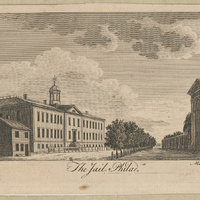 Walnut Street Prison (1789) Walnut Street Prison (1789) |
|
An etching of the Walnut Street Prison in Philadelphia. Established as a city jail in 1773, it was expanded in 1790 to become the first state penitentiary in the new country. This prison was among the first to feature individual cells and was built to accommodate work details. The penitentiary was noted to have a larger percentage of Black inmates than white, noting the racialization of incarceration in the United States. The prison was in operation until 1838.
|
| War Brides Act (1945) |
|
The War Brides Act was a federal law that allowed for the naturalization of foreign women married to United States servicemen.
|
| White Person Marrying a Negro or Celebrating Such Marriage (1873) |
|
This act passed by the Virginia General Assembly punished any white person who intermarried with a Black person with fines and jail time. It also fined the person who conducted the ceremony, with half of the fine going to the informant who reported the marriage to authorities.
|
| Winny v. Phebe Whitesides alias Prewitt (1824) |
|
This case was the first freedom suit heard by the Missouri Supreme Court. Winny claimed her freedom on account of being brought into the free territory of what would become Illinois before being removed to Missouri. The court found in favor of her freedom, establishing a "once free, always free" precedent that was eventually overturned by the decision in Dred Scott v. Sandford.
|
| Woman Suffrage in Territories (1883) |
|
This newspaper article discusses the women's suffrage act passed in Washington Territory. Washington was the third territory to grant women suffrage rights, although the Territorial Supreme Court later overturned the law.
|
| Worcester v. Georgia (1832) |
|
In this case, the Supreme Court ruled that the Cherokee people had sovereign powers as a nation. The case arose after a Protestant missionary was convicted of residing among the Cherokee Nation in Gwinnett County, Georgia, without a license from the state. The Supreme Court vacated Worcester's conviction, stating that individual states did not have authority over Native American affairs
|
| Wyoming Declaration of Rights (1889) |
|
The first article of the State of Wyoming's Constitution enumerates certain rights within the state. Wyoming Territory was the first government to grant women suffrage rights, and that right was preserved in the Declaration of Rights when organizing the state government.
|
| Yarborough v. Alvarado (2004) |
|
In this case, the Supreme Court overturned a Ninth Circuit Court of Appeals ruling that stated that youth and inexperience with law enforcement should be accounted for when evaluating custody. In the majority opinion, the Supreme Court held that previous rulings had rejected reliance on factors such as age and inexperience in custody analysis.
|
| Yasui v. United States (1943) |
|
In this case, the Supreme Court held that curfews against minority groups were constitutional at a time of war against the country that group's ancestors originated from. After the Executive Order 9066 was issued in the wake of the attack on Pearl Harbor, Japanese Americans were subject to curfews and other restrictions in addition to being removed to internment camps. Minoru Yasui was convicted of violating the curfew. This was a companion case to Hirabayashi v. United States, decided on the same day.
|